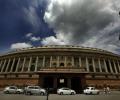
Let there be a rule that if the Budget is not passed and funds cannot be drawn from the Consolidated Fund of India, there will be a government shutdown as it happens in the United States, says A K Bhattacharya.

Backloading the government's borrowing programme suggests the finance ministry's confidence in better revenue numbers, says A K Bhattacharya.
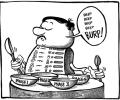
How sustainable and prudent is the policy of boosting services without commensurate growth in infrastructure in the relevant sectors, asksA K Bhattacharya.

It would be a good idea to create independent oversight committees for each regulatory institution and indeed, even for their appellate bodies, says A K Bhattacharya.

It appears that the BJP government has succeeded in managing the communication of the PNB scam in a manner that its adverse impact on its electoral fortunes is largely contained
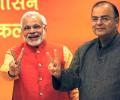
Reduce the government stake in public sector banks to 33 per cent, recommends A K Bhattacharya

Without the handsome receipts from the sale of government equity in PSUs and sharp increases in excise revenues from oil, Mr Jaitley's fiscal consolidation drive would have become even more arduous, says A K Bhattacharya.

The Budget for 2018-19 has at least five takeaways that are yet to receive adequate attention, says A K Bhattacharya.

Finance Minister Arun Jaitley said the fiscal deficit slippage this financial year (2017-18) was largely statistical.

A collaborative approach can yield better results in reforming labour laws that can be implemented in the whole country, instead of different states following different norms in their own jurisdictions. That approach could also help the governments convince the trade unions to see merit in these reforms, says A K Bhattacharya.

India's rank in the World Bank's ease of doing business index cannot get better unless more attention is paid to bringing about procedural reforms in the way states run their governments and provide various approvals for trade and industry, says A K Bhattacharya.

The dates of general elections in 2019 and the presentation of the final Budget of the Modi government are so far removed from each other that Jaitley is not under any pressure to present a populist Budget. Instead, he could well unveil an array of schemes and proposals that he believes are necessary for the economy, even if a few of them could be unpopular, says A K Bhattacharya.

Questions on the efficacy of the government's drive towards filing of more returns by individuals and on whether raising tax exemption levels has led to reduced compliance in filing of returns by those who go out of the tax net, says A K Bhattacharya.

The battle on creating jobs is virtually lost. If the battle for achieving higher growth too is lost, then its political consequences could become difficult to manage, says A K Bhattacharya.

'Do you think Indian voters are so immature that they can be impressed or won over by such freebies before the elections?' Election Commissioner Sunil Arora asks A K Bhattacharya.

If the states do not chip in with better governance procedures in the setting up of new businesses, providing electricity connections, enforcing contracts, issuing construction permits or registering property, there is little the Centre can do on its own to quickly move India up the index on ease of doing business, says A K Bhattacharya.
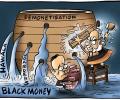
Assuming that demonetisation had not happened, the value of notes in circulation this year could have increased to Rs 19.3 lakh crore. But what we have, instead, by the end of August is a 20 per cent lower figure for currency notes in circulation, says A K Bhattacharya.

In spite of an overall healthy rise in exports, there are many traditional sectors which used to be the mainstay of India's exports in the past, but are now suffering from significant weaknesses, says A K Bhattacharya.

To make its voice more credible and impactful, the Congress must articulate its alternative agenda for reforms, economic growth and a more inclusive political discourse.

If Sinha's criticism gives credence to the view within the party that its members are afraid to speak up, it can do long-term damage.
